Speaker: Dr. Shashank Shekhar(Emory)
Host: JC Gumbart
Title: Self-assembly Across Scales: From Cytoskeletal Dynamics to Evolution of Multicellularity
Abstract: Philip Anderson famously remarked that "more is different". Complex systems exhibit emergent behaviors that cannot be understood solely from the properties of their individual parts. Living systems exemplify this principle, organizing molecules into cells and cells into multicellular structures through self-assembly. Yet the principles governing these emergent behaviors remain poorly understood. In this talk, I will describe our recent research, which combines quantitative biophysical experiments with theoretical modeling to uncover mechanisms underlying biological self-assembly across scales. At the molecular scale, I will discuss our work on the actin cytoskeleton, where we have shown that actin filament ends function as dynamic molecular ecosystems in which polymerases, depolymerases, and capping proteins collectively regulate actin filament dynamics. These findings challenge the classical model of actin treadmilling and reveal new mechanisms underlying cellular actin dynamics. I will then discuss our studies of the giant unicellular protist Stentor coeruleus, showing how hydrodynamic interactions between neighboring cells enhance feeding and generate asymmetric fitness advantages, providing a physical mechanism for the early transition to multicellular organization. Together, these studies illustrate the role of self-organization and collective interactions in driving the emergence of biological complexity across vastly different length scales.
Bio: Dr. Shashank Shekhar is an Assistant Professor of Physics at Emory University. His research combines quantitative biophysical experiments with theory to uncover the physical principles governing biological self-assembly across molecular and organismal scales. His work has been recognized with the NSF CAREER Award, the NIH Maximizing Investigators' Research Award (MIRA), the Biophysical Society’s Early Career Award in Mechanobiology, the Whitman Early Career Award from the Marine Biological Laboratory and Les Grandes Avancées Françaises en Biologie award from the French Academy of Sciences. Dr. Shekhar received his Ph.D. in Nanobiophysics from the University of Twente (The Netherlands), following master's degrees in Nanoscience and Molecular Bioengineering from TU Delft (The Netherlands) and TU Dresden (Germany), and a bachelor's degree in Physics from Loyola College, India.
Event Details
Date/Time:
-
Date:Monday, September 28, 2026 - 3:30pm to 4:30pm
Location:
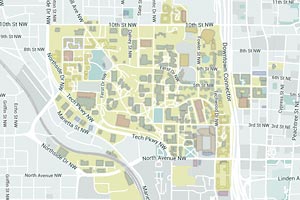
Marcus Nanotechnology room 1116-1118