Latest News
The NSF Graduate Research Fellowship supports “outstanding students with exceptional potential for leadership in STEM.”

The Regents’ Awards are among the University System of Georgia’s highest honors, recognizing sustained excellence, national distinction, and long-term impact by faculty and researchers across the state’s public institutions.

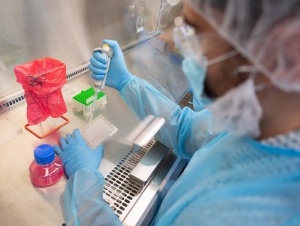
Using artificial intelligence, the team is developing an edible vaccine that could protect birds from bird flu and reduce its spread to livestock and humans.
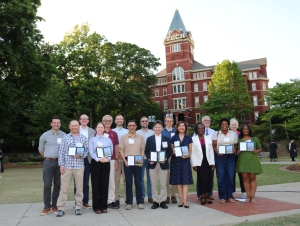
The College of Sciences recognized faculty and staff excellence during this signature event.
Events
Experts in the News
Bacteria have no neurons or memories in the human sense. Yet in a new study, researchers at Georgia Tech and Carnegie Mellon University — including School of Physics Associate Professor Shiladitya Banerjee and Postdoctoral Fellow Josiah Kratz — found that individual E. coli cells carried traces of past hardship into the future. When nutrients repeatedly rose and fell, the cells changed how quickly they grew, suggesting that even simple microbes can use experience to prepare for what may come next.
ZME Science 2026-06-10T00:00:00-04:00A new study led by researchers, including School of Physics graduate student Julia Esposito and Associate Professor Gongjie Li, used 1,500 virtual planetary systems to examine how planet-planet scattering may have influenced the formation of Jupiter-sized planets.
American Astronomical Society NOVA 2026-05-22T00:00:00-04:00Researchers have long known that when two galaxies approach each other and merge, the supermassive black holes at their centers form a pair and are eventually expected to merge as well. It is precisely these mergers that are considered one of the sources of the gravitational-wave background — a faint “hum” of spacetime detected in recent years. However, the role played by the geometry of the collision in this process has remained an open question.
Graduate student Sena Ghobadi of the Georgia Institute of Technology’s School of Physics, along with her colleagues, has developed three-dimensional dynamic models of such collisions.
A similar story appeared in Sky & Telescope.
Universe Magazine 2026-04-28T00:00:00-04:00Research led by Georgia Tech physicist Itamar Kolvin has found that the presence of small imperfections or heterogeneities in materials can have a dual effect on their strength and resilience. While heterogeneities were historically believed to make materials stronger by creating an obstacle course for cracks, the new study shows that in some complex materials, heterogeneities can actually accelerate crack propagation and weaken the overall structure. The findings have implications for how engineers design and reinforce materials to optimize their toughness.
Atlanta Today 2026-02-27T00:00:00-05:00Assistant Professor Zhu-Xi Luo and Ph.D. student Yi-Lin Tsao from Georgia Institute of Technology's School of Physics have demonstrated a novel mechanism for stabilising physical phases vulnerable to topological defects. Their work addresses a fundamental problem in condensed matter physics: the destabilisation of phases like superfluids by thermally-induced defects such as anyons and vortices.
Quantum Zeitgeist 2026-02-25T00:00:00-05:00In an article published in Physics Magazine, School of Physics Ph.D. student Jingcheng Zhou and Assistant Professor Chunhui (Rita) Du review efforts to optimize diamond-based quantum sensing. According to Zhou and Du, the approach used in two recent studies broadens the potential applications of nitrogen-vacancy center sensors for probing quantum phenomena, enabling measurements of nonlocal properties (such as spatial and temporal correlations) that are relevant to condensed-matter physics and materials science.
Physics Magazine 2025-07-14T00:00:00-04:00