Speaker:
Host: Dr. Afroditi Papadopoulou
Title: Accelerating DUNE detector simulation with Celeritas
Abstract:
The high energy and nuclear physics (HEP/NP) communities have outlined a comprehensive and ambitious scientific program for the next decade. This next generation of experiments will reach an unprecedented level of detector complexity and statistical requirements, leading to multiple challenges on both hardware and computing fronts. Within the latter, detector simulation is particularly limited due to lack of compute resources, with collaborations trading off fidelity and/or statistics by reasonable processing times. The Celeritas Project aims to alleviate such limitations by allowing experiments to use GPU resources for their detector simulation efforts, including the possibility of integrating their computational workflows with the U.S. Department of Energy's (DOE) Leadership Computing Facilities, which are all GPU-based. One such experiment is the Deep Underground Neutrino Experiment (DUNE), which is the largest project within the DOE HEP Office. The Celeritas team has been collaborating closely with DUNE to enable the transport of optical photons generated by neutrino events on GPU. Fast, high-fidelity optical simulations will provide better understanding of the light response of the detector and will ultimately affect DUNE's program on multiple avenues. These range from improving t_0 determination for event reconstruction on oscillation analyses, to reducing systematic uncertainties of low-energy event reconstruction, to helping separate neutrino pile-ups in the Near Detector. This talk will present an overview of the Celeritas Project, its integration with the DUNE software framework, current performance results, and provide an outlook of future work and opportunities for the DUNE physics program.
Short bio:
Stefano Tognini received his Ph.D. in Physics from the Federal University of Goias after working on MINOS and NOvA experiments. Currently, he is a Research Scientist at Oak Ridge National Laboratory, where his main efforts are focused on Celeritas, an ORNL-led, GPU-optimal Monte Carlo particle transport code for High Energy and Nuclear Physics. Beyond Celeritas, he is also involved with other research topics, including nuclear non-proliferation and muon-catalyzed fusion efforts.
Event Details
Date/Time:
-
Date:Wednesday, December 2, 2026 - 2:30pm to 3:30pm
Location:
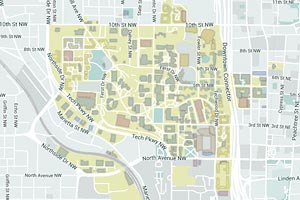
College of Computing Building (CCB) Rm:103