After watching hundreds of mosquitoes buzzing around one of their colleagues and collecting 20 million data points, Georgia Tech and Massachusetts Institute of Technology researchers have created a mathematical model that predicts how and where female mosquitoes will fly to feast on humans.
The new study is the first to visualize mosquito flight patterns and provides hard data for improving capture and control strategies. In addition to being a nuisance, mosquitoes transmit diseases such as malaria, yellow fever, and Zika, which cause more than 700,000 deaths every year.
“It’s like a crowded bar,” said David Hu, a professor in Georgia Tech’s George W. Woodruff School of Mechanical Engineering and the School of Biological Sciences, with an adjunct appointment in the School of Physics. “Customers aren’t there because they followed each other into the bar. They’re attracted by the same cues: drinks, music, and the atmosphere. The same is true of mosquitoes. Rather than following the leader, the insect follows the signals and happens to arrive at the same spot as the others. They’re good copies of each other.”
Read more and watch:
Georgia Tech College of Engineering newsroom and The Conversation
Related Media
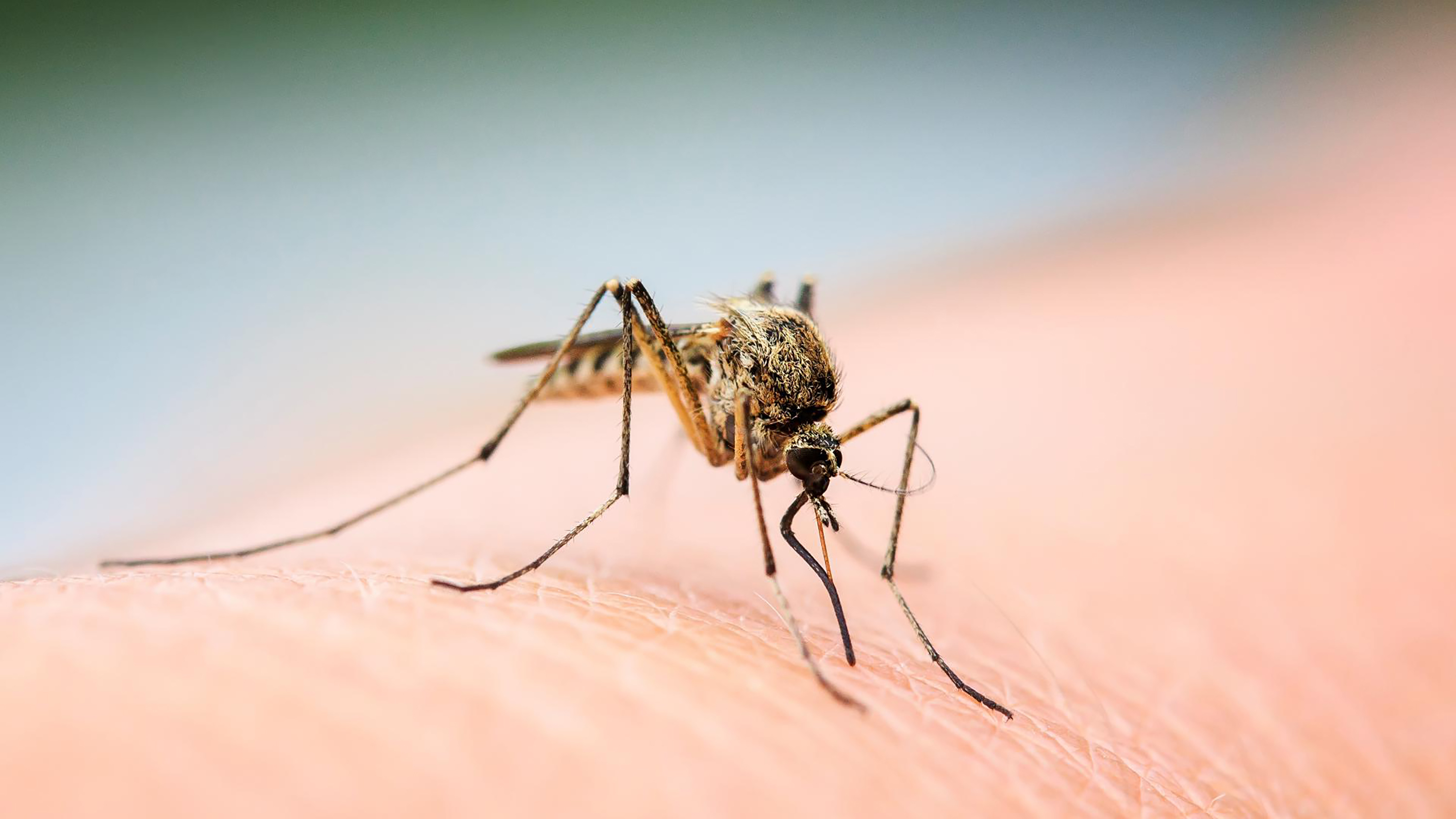
A female mosquito lands on a human.
For More Information Contact
Jason Maderer (maderer@gatech.edu)