One day after the historic Artemis II launch, the College of Sciences welcomed more than 150 researchers, students, and community members to its signature Frontiers in Science conference. Held on April 2, the full-day event focused on space research guiding discovery and innovation.
As during previous editions, this year’s conference featured more than two dozen scientists, engineers, policy experts, and thought leaders from Georgia Tech and beyond, illustrating how collaboration across fields – from science and engineering to public policy and international affairs – helps to advance strategic research priorities.
“Frontiers is about discovery and connections across disciplines and generations,” says Susan Lozier, dean of the College of Sciences and Betsy Middleton and John Clark Sutherland Chair. “This edition provided an inspiring glimpse into the future of space exploration and the many ways Georgia Tech is contributing to research and missions seeking answers to what lies beyond our planet.”
Commitment to Space
Space research is a key institutional priority at Georgia Tech, which is home to numerous academic and research programs in planetary sciences, robotics, mission design, space policy, and other areas.
The recently established Space Research Institute (SRI) serves as the central hub connecting the broad range of space-related research across campus. Led by Jud Ready, who also serves as principal research engineer at the Georgia Tech Research Institute, SRI has expanded support for space research and commercialization through initiatives such as the CreationsVC Space Fellows Program and Centers, Programs, and Initiatives seed grant program.
SRI’s efforts are in line with Georgia Tech’s long-standing contribution to space exploration. Hundreds of Yellow Jacket alumni work in the space sector, including several graduates who are playing key roles in the Artemis program. To date, more than a dozen Georgia Tech alumni have traveled to space.
Exploring the Final Frontier
The conference featured a series of panels and discussions led by faculty and researchers from the Colleges of Sciences and Engineering as well as the Ivan Allen College of Liberal Arts.
Sessions explored how researchers are studying the processes and conditions that support planetary habitability, seeking to answer one of humanity’s greatest questions: Does life exist beyond Earth? Speakers also examined how analog fieldwork in Earth’s extreme environments can inform space exploration, and how space research, in turn, can deepen our understanding of our own world.
Additional conversations centered on building better space missions through improved understanding of team and individual resilience, data collection, navigation, and the development of advanced technologies like the robots developed through the NASA LASSIE Project.
Frontiers also highlighted Georgia Tech’s commitment to preparing the next generation of space scientists, engineers, and leaders. Student training and engagement were recurring themes throughout the day, with speakers emphasizing opportunities for student-led and student-run missions and research. A panel of Georgia Tech alumni shared their own STEM career journeys, challenging the idea of “one right path” to success — and acknowledging the resources and opportunities available at the Institute.
A highlight of the conference was a fireside chat with Atlanta-native, retired U.S. Army Colonel and NASA Astronaut R. Shane Kimbrough (M.S. Operations Research 1998). Kimbrough, who spent a total of 388 days in space and performed nine spacewalks across three missions, reflected on his career and the evolution of spaceflight. He emphasized the expanding role of public-private and international partnerships in advancing ambitious goals, such as creating a permanent human outpost on the Moon.
Policy and Public
The conference also explored how policy influences space discovery and innovation, with discussions touching on such issues as space security, access, governance, sustainability — and the influence of technology and science fiction on public perception and policy.
Panelists described current policy frameworks governing outer space as struggling to keep pace with rapidly advancing technologies and expanding activities. According to these experts, increasing tensions among commercial, research, and recreational uses of space call for greater coordination among private and government entities to balance competing priorities while maximizing opportunities for innovation and exploration.
The conference was punctuated by a networking lunch connecting attendees with Atlanta’s public astronomy community – including partners at several universities and the Georgia Tech Astronomy Club, which set up telescopes for attendees to safely observe the sun. Later that evening, the Georgia Tech Observatory hosted its Public Night, welcoming the broader Atlanta community to campus for telescope views of Jupiter, the Orion Nebula, and other celestial bodies.
The Observatory Night was a fitting conclusion to a full day focused on Georgia Tech’s commitment and contributions to inspiring future generations of space explorers through research, education, and outreach.
Experience the Frontiers conference in pictures on the College of Sciences’ Flickr account.
Related Media
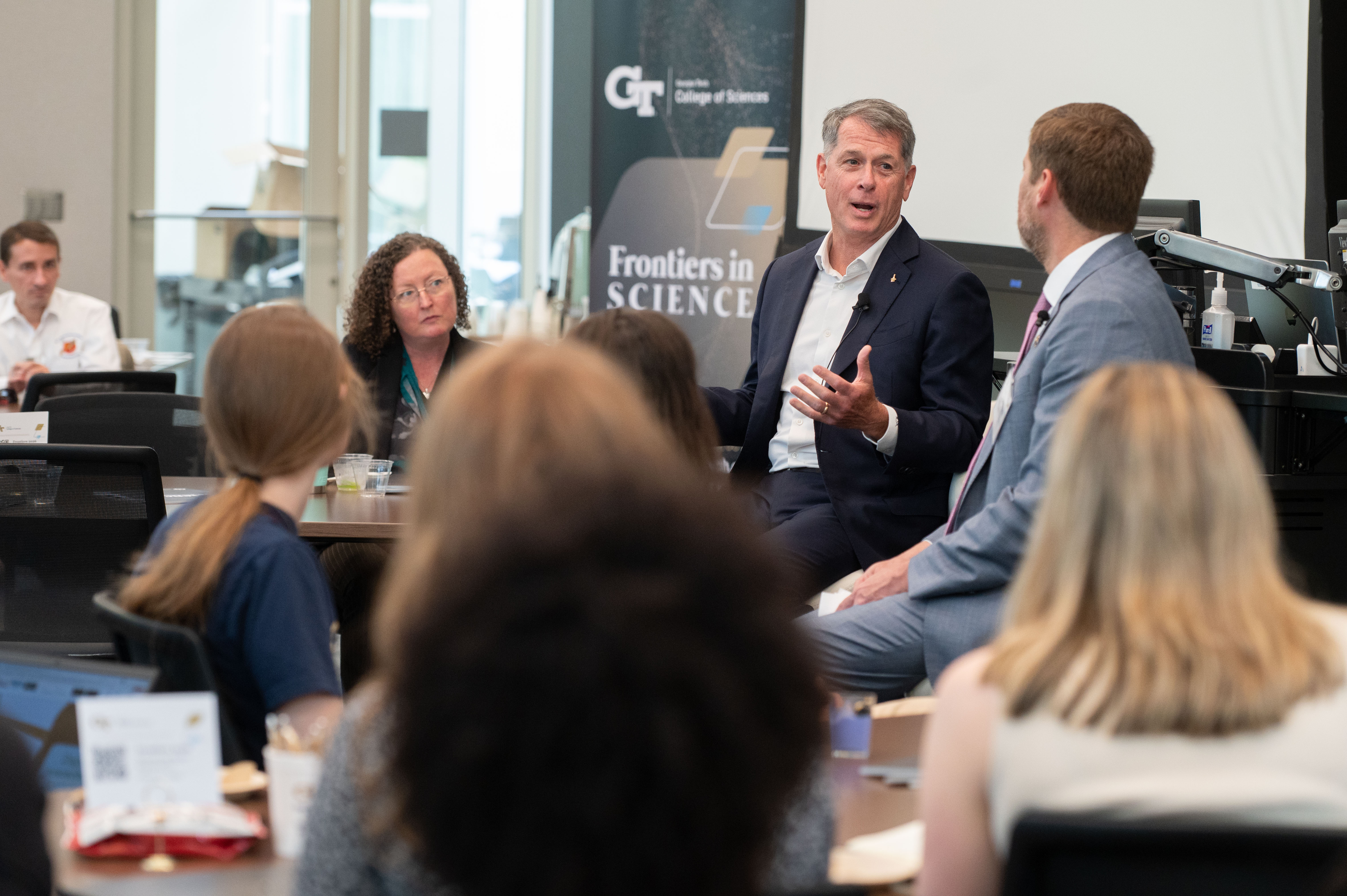
Retired NASA astronaut R. Shane Kimbrough (M.S. Operations Research 1998) reflects on his career and the evolution of spaceflight.
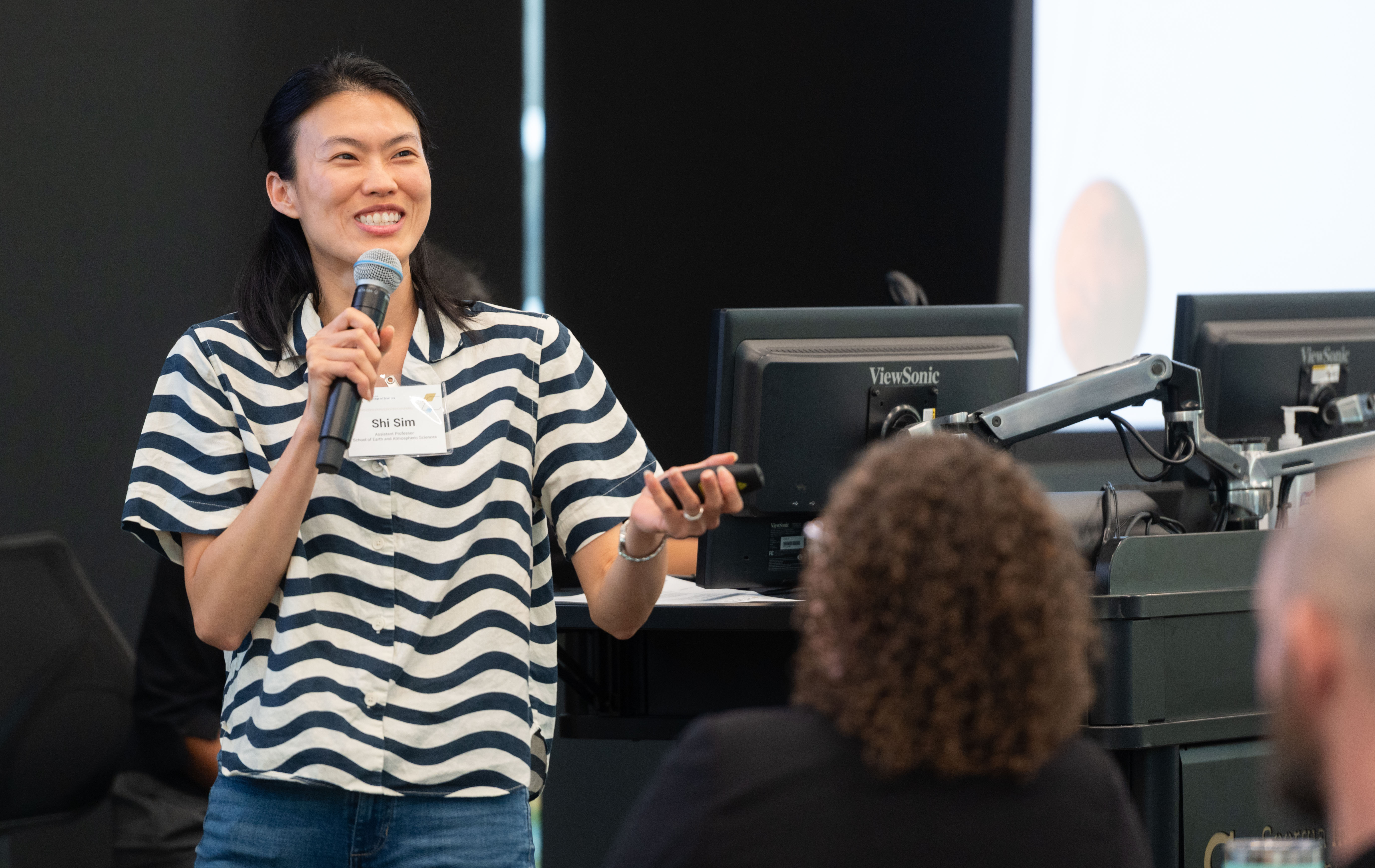
Joyce Shi Sim, assistant professor in the School of Earth and Atmospheric Sciences
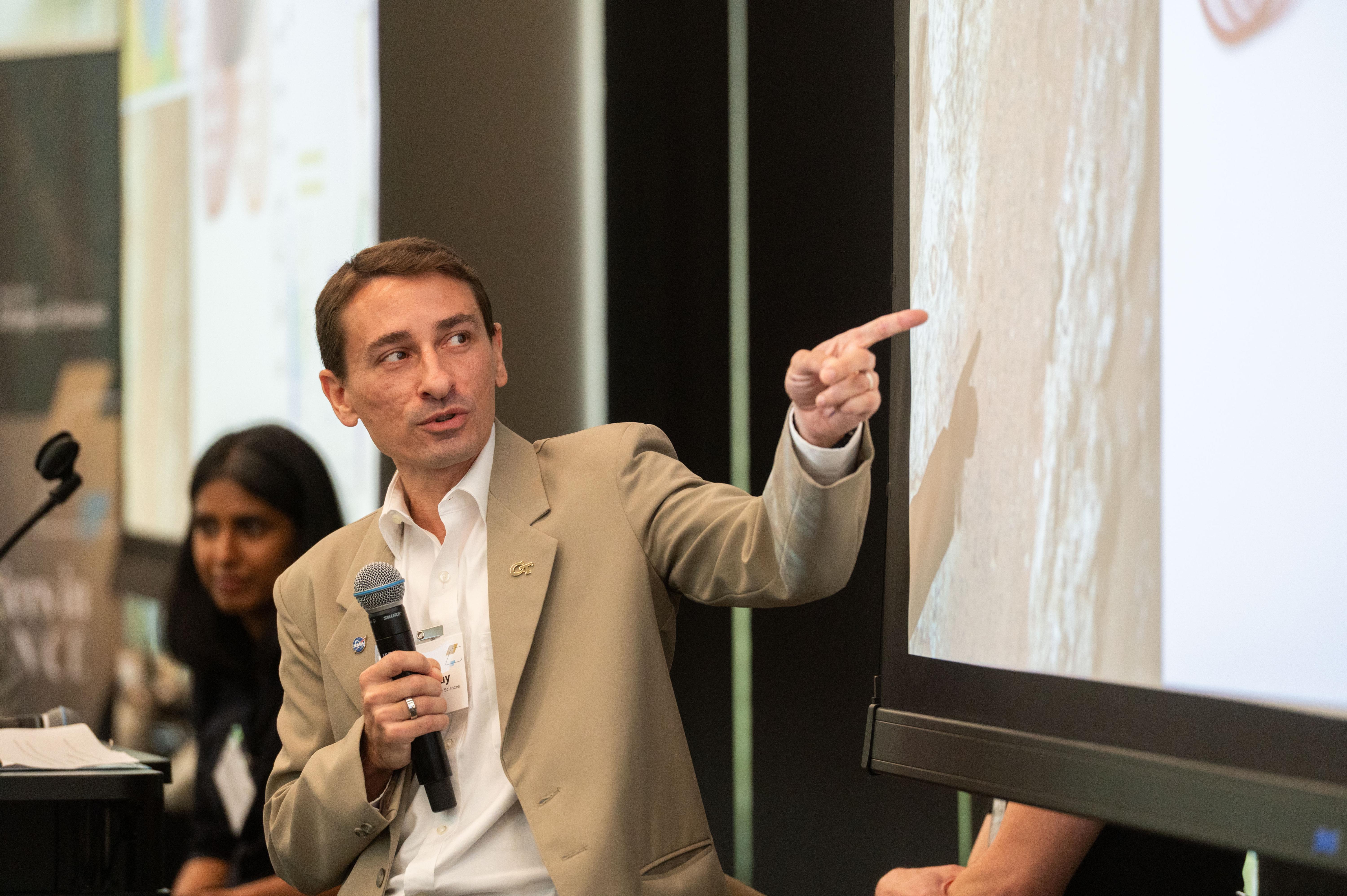
Professor James Wray, professor in the School of Earth and Atmospheric Sciences
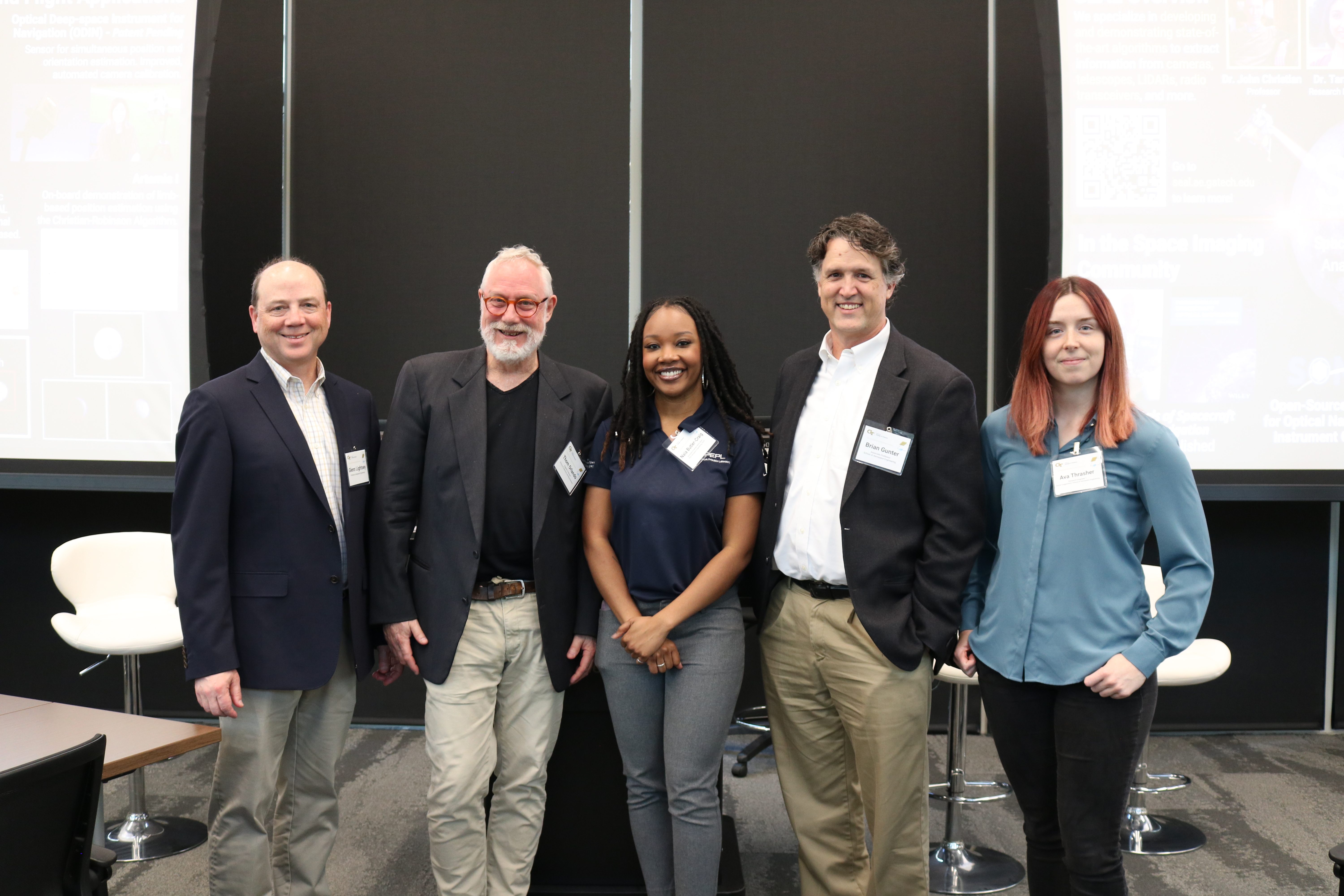
[From left] Professor Glenn Lightsey, Professor Thom Orlando, Moderator Naia Butler-Craig (M.S. AE 2023, Ph.D. AE 2026), Associate Professor Brian Gunter, and Research Engineer I Ava Thrasher
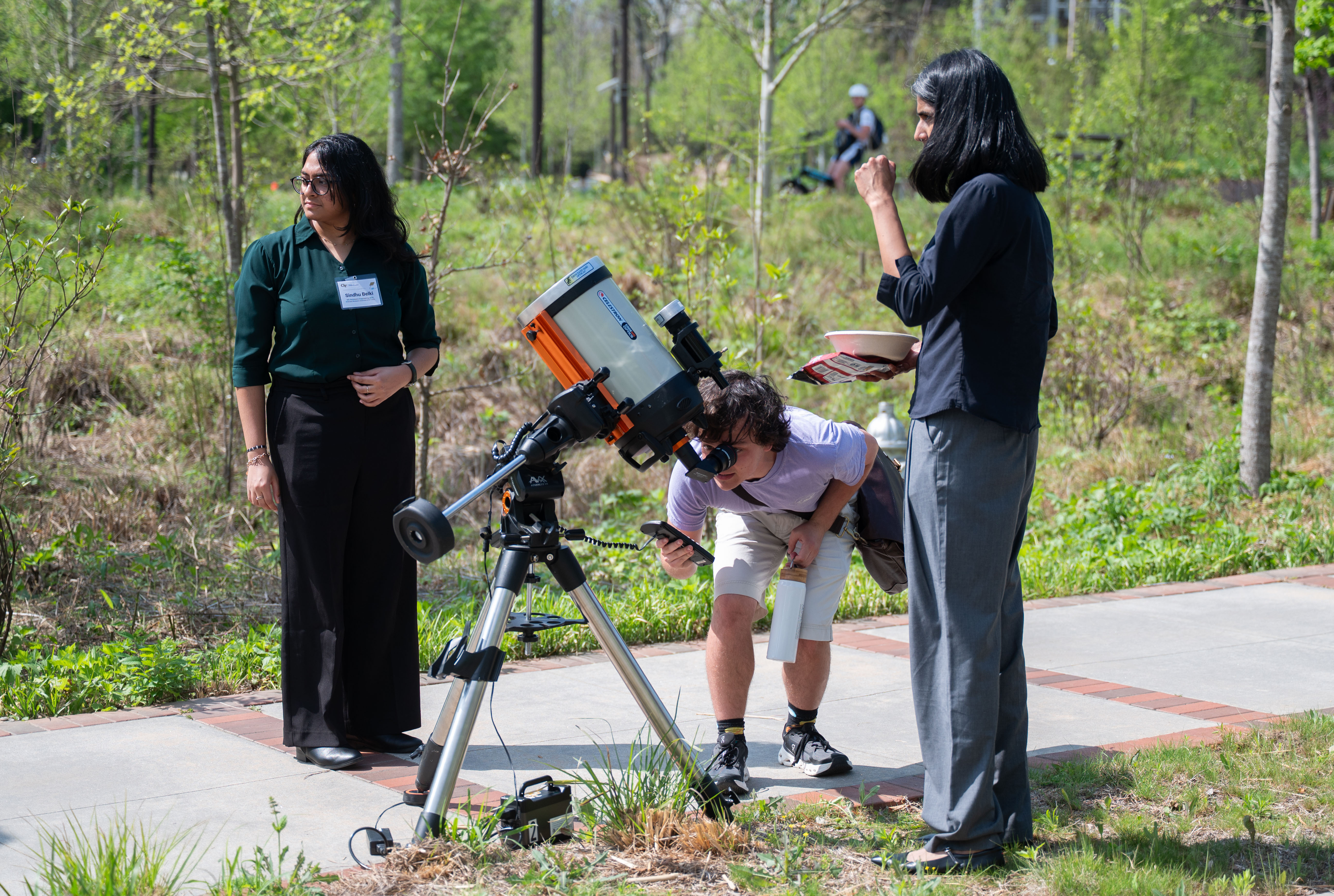
The Georgia Tech Astronomy Club set up telescopes for attendees to safely observe the sun.
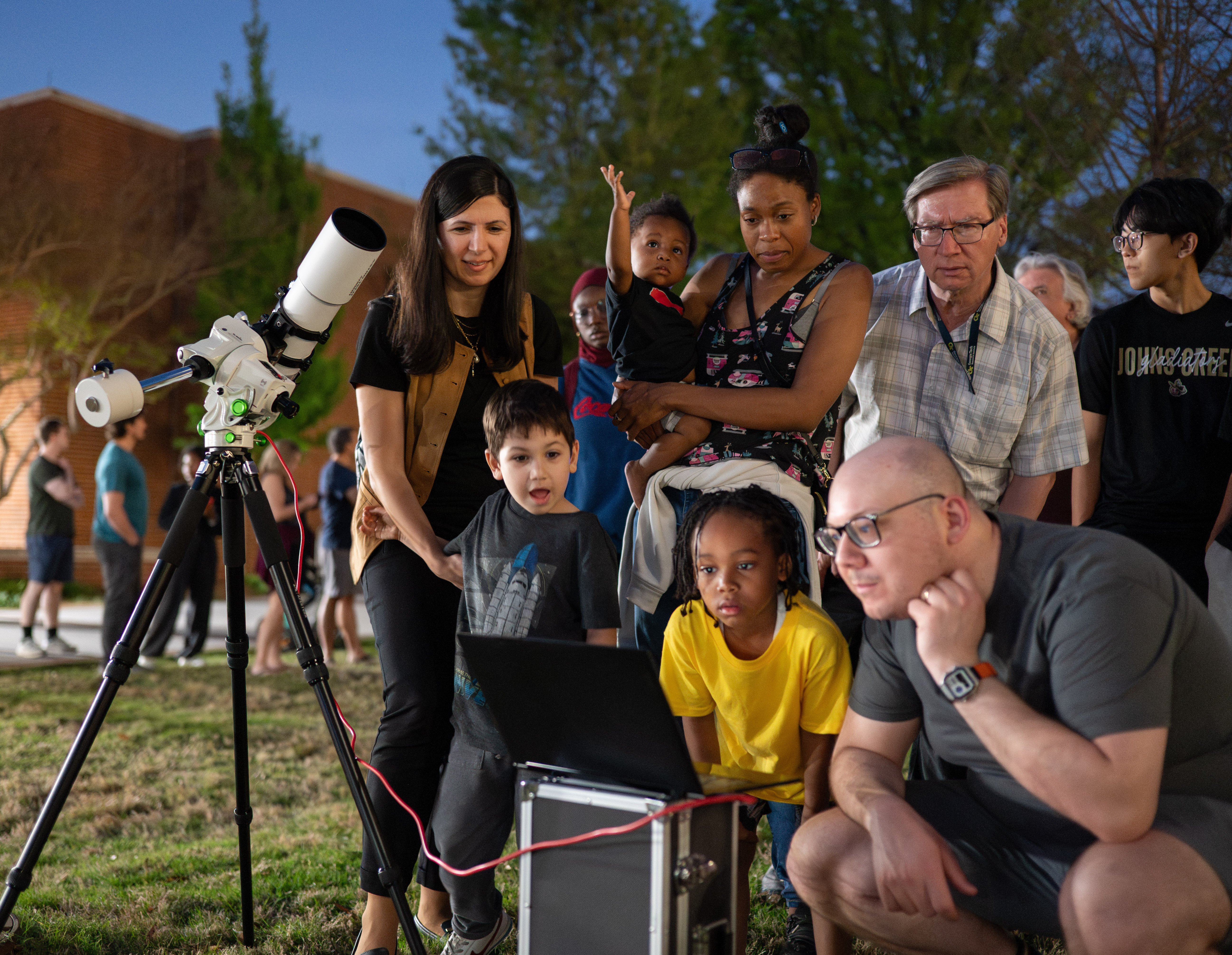
Georgia Tech Observatory’s April 2, 2026 Public Night
For More Information Contact
Writer: Lindsay C. Vidal