Flavio Fenton, professor in the School of Physics, has been named one of four inaugural Bill Kent Family Foundation AI in Higher Education Faculty Fellows. Led by Georgia Tech’s Center for 21st Century Universities (C21U), this fellowship supports faculty projects that explore innovative, ethical, and impactful uses of AI in teaching and learning.
“AI is here to stay; therefore, I want students to learn to treat it like a lab partner, not an answer machine,” says Fenton, who also serves as adjunct professor in the School of Biological Sciences. “By making its methods and limits visible, we can use AI to strengthen conceptual understanding, practice ethical judgment, and build the habits of inquiry that real science requires.”
Fenton has already had insightful exchanges with the other faculty fellows: Joy Arulraj of the College of Computing, Patrick Danahy of the College of Design, and Ying Zhang of the College of Engineering.
“We're finding new ways to collaborate on AI in education, so I am sure that our collective impact will be greater than the sum of our individual projects,” he adds.
As part of the program, each fellow is leading a project during the 2025-26 academic year that advances AI’s role in higher education. They will share project outcomes through C21U Learning Labs and other campus events.
Fenton’s project, “AI as a Learning Assistant,” centers on developing AI-enabled instructional modules for four courses: Computational Physics (PHYS 3266/6260), Introductory Physics I (PHYS 2211), Neurophysics (PHYS 4250), and Scientific Writing (PHYS 6801). The modules pair simulation-based practice, guided prompting, and coding mini-labs with model “trust checks,” including verification steps, error cues, and citation prompts. The goal is to help students learn to ask better structured questions, reason with evidence, evaluate AI output and failure modes, and use AI ethically — while giving instructors lightweight analytics to target misconceptions and refine materials across semesters.
Related Media
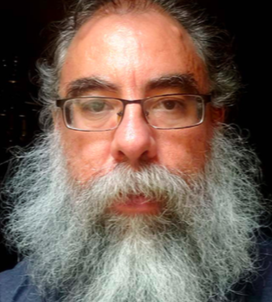
Professor Flavio Fenton
For More Information Contact
Writer: Lindsay C. Vidal